
Client-safe summaries
Share candidate evidence without overclaiming.
Recruitment agencies need to communicate candidate signals clearly without turning assessment outputs into final judgments. Client-safe summaries help separate evidence, risks to verify, and interview questions.
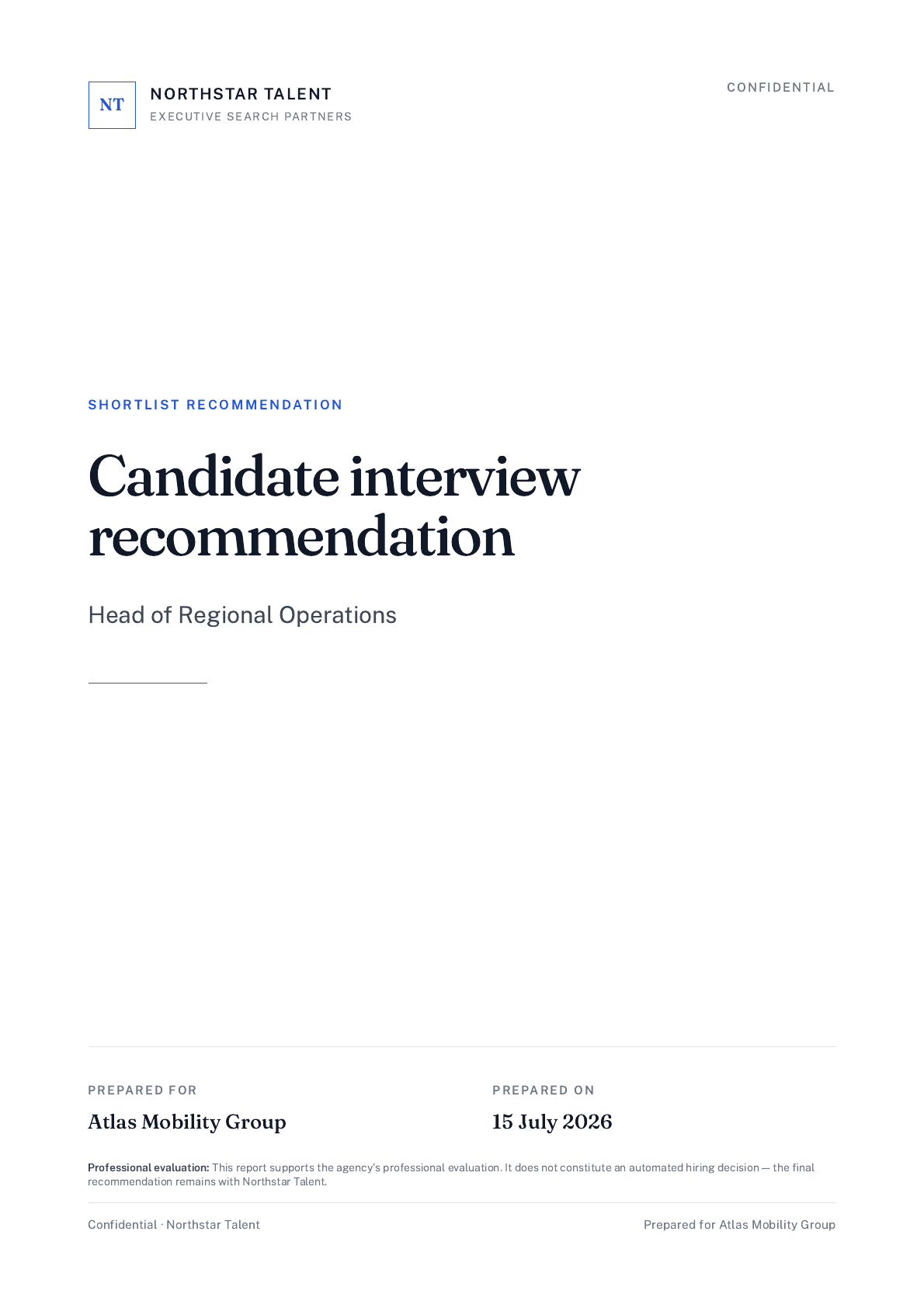
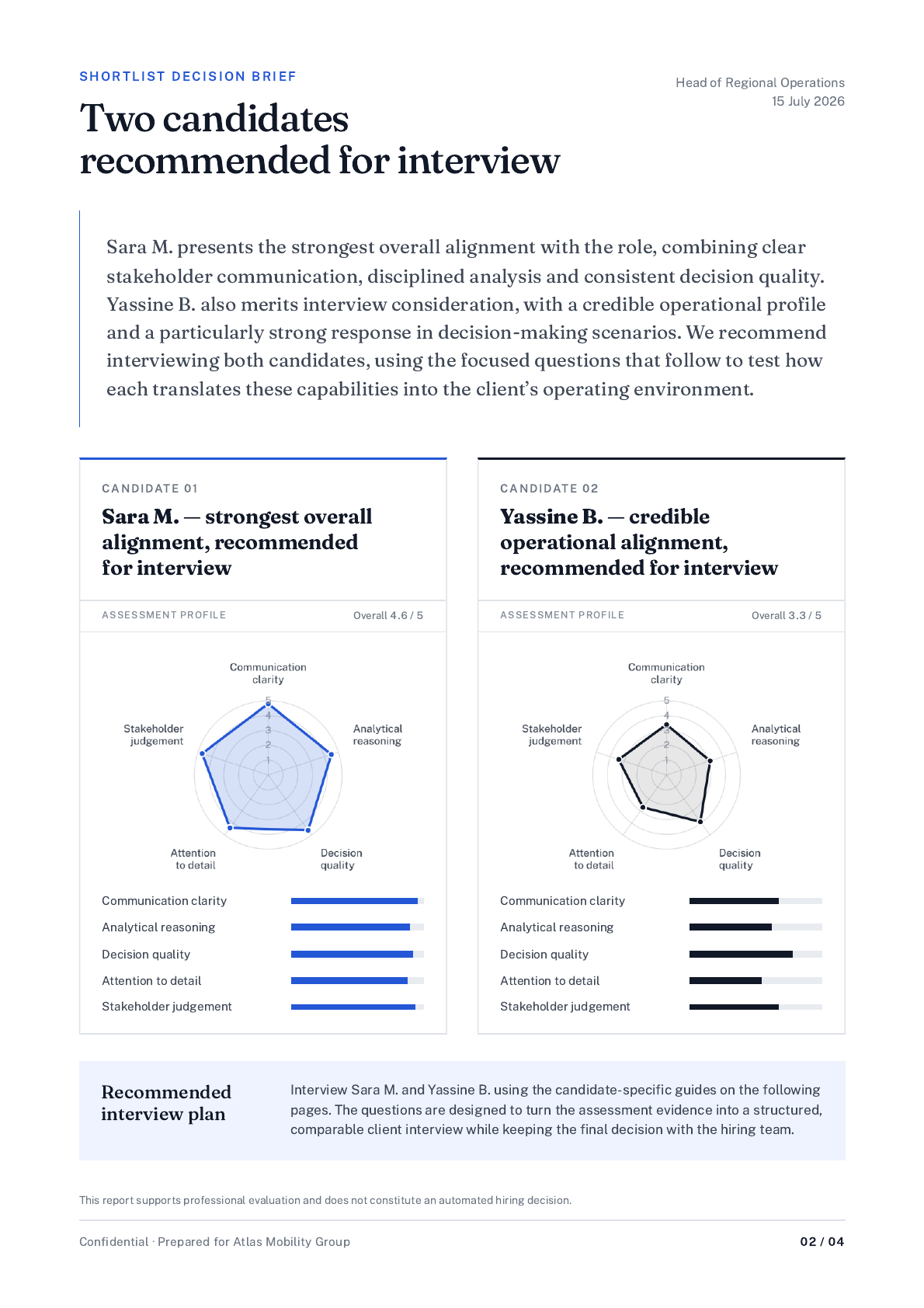
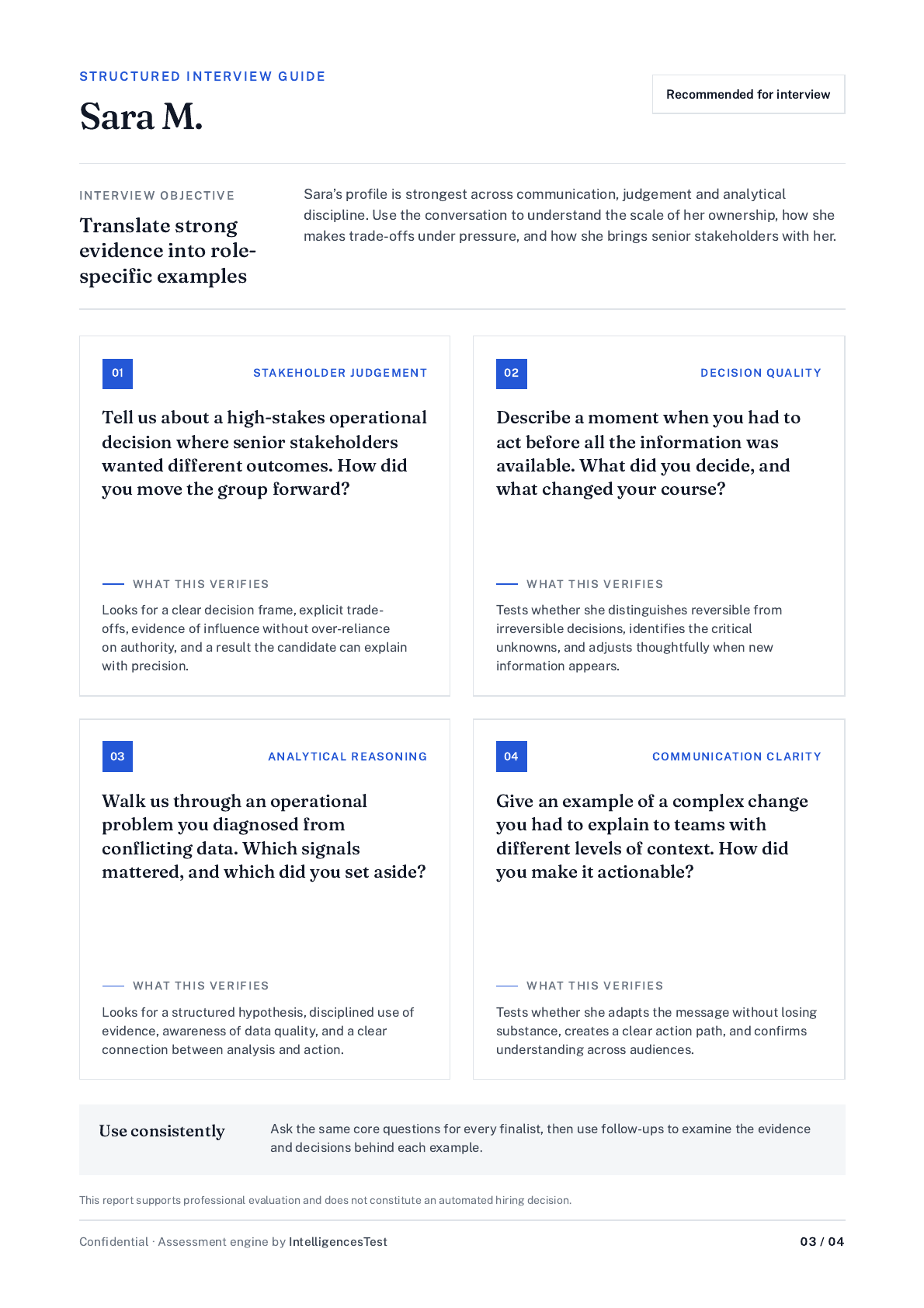
Actual client-facing output
Why this matters
A client does not need a pile of raw assessment language.
Clear evidence
Summaries translate assessment signals into recruiter-friendly evidence that can support a shortlist discussion.
Visible uncertainty
Risk language shows what still needs interview validation instead of pretending the assessment has answered everything.
Better interviews
Structured questions help the client or recruiter verify candidate fit in the next conversation.
The client-ready brief, not a raw score export
Inside the summary
What belongs in a client-safe summary.
The safest output is specific enough to be useful and cautious enough to respect human review.
- 01Role-relevant strengths
What the candidate appears to bring that may matter for the role.
- 02Evidence points
The observable signals supporting the summary.
- 03Risks to verify
Areas that should be checked through interview, references, or work samples.
- 04Interview questions
Questions that turn assessment signals into a structured conversation.
- 05Human-review disclaimer
A reminder that the report supports recruiter judgment and does not decide the hiring outcome.
Responsible language
What should not be shared as a verdict.
Client-safe does not mean watered down. It means precise, fair, and responsible.
Avoid
- Automatic pass/fail language.
- Medical or diagnostic claims.
- Statements that imply the software decided the outcome.
- Raw scores without context.
- Confident claims where the signal is only directional.
Use instead
- “Evidence suggests…”
- “This should be verified in interview…”
- “A useful follow-up question is…”
- “Recruiter review remains required…”
- “This is one evidence layer, not a final decision.”
Human review stays central
The report supports recruiter judgment. It does not decide who to hire.
Client-safe summary FAQ
Direct answers for responsible client communication.
How to share assessment evidence without turning it into an automatic verdict.
A client-safe candidate summary presents assessment evidence in responsible language for client discussions. It focuses on strengths, risks to verify, and interview questions.
It should avoid automatic pass/fail language, diagnostic claims, unsupported certainty, and statements that imply the software made the hiring decision.
Agencies should share only responsible, relevant summaries that support human review and client discussion, not raw or misleading assessment data.
They help agencies communicate evidence clearly while protecting candidate fairness and avoiding overclaiming.
Build better client conversations.
Use IntelligencesTest to prepare clearer shortlist conversations while keeping the agency’s professional judgment at the center.